
Non-emergency medical transport injuries happen more often than most people realize, and when the company involved is Modivcare or its predecessor LogistiCare, the situation can be more complicated than a standard car accident claim. If you or someone you care for was hurt while being transported to a dialysis appointment, a doctor’s visit, or any other scheduled medical trip, understanding who is responsible matters before you take any next steps.
If you are unsure how this applies to your situation, you can call (888) 712-0017 for a free case evaluation. A short conversation can help you understand your options and whether your case qualifies.
What Modivcare and LogistiCare Actually Are
Modivcare, formerly known as LogistiCare, is one of the largest non-emergency medical transportation (NEMT) brokers in the country. The company does not typically employ the drivers who transport patients. Instead, it contracts with independent transportation providers and subcontractors who carry out the actual rides.
This distinction is legally significant. When a patient is injured, the question of whether Modivcare bears liability often turns on the relationship between the broker and the subcontracted driver or carrier. California courts and federal regulations have both addressed this type of arrangement in ways that can affect your claim.
Modivcare manages NEMT services on behalf of Medi-Cal and Medicare managed care plans across California. If the ride was arranged through one of those programs, there may be additional regulatory requirements that the broker and its subcontractors were obligated to follow.
How These Injuries Happen
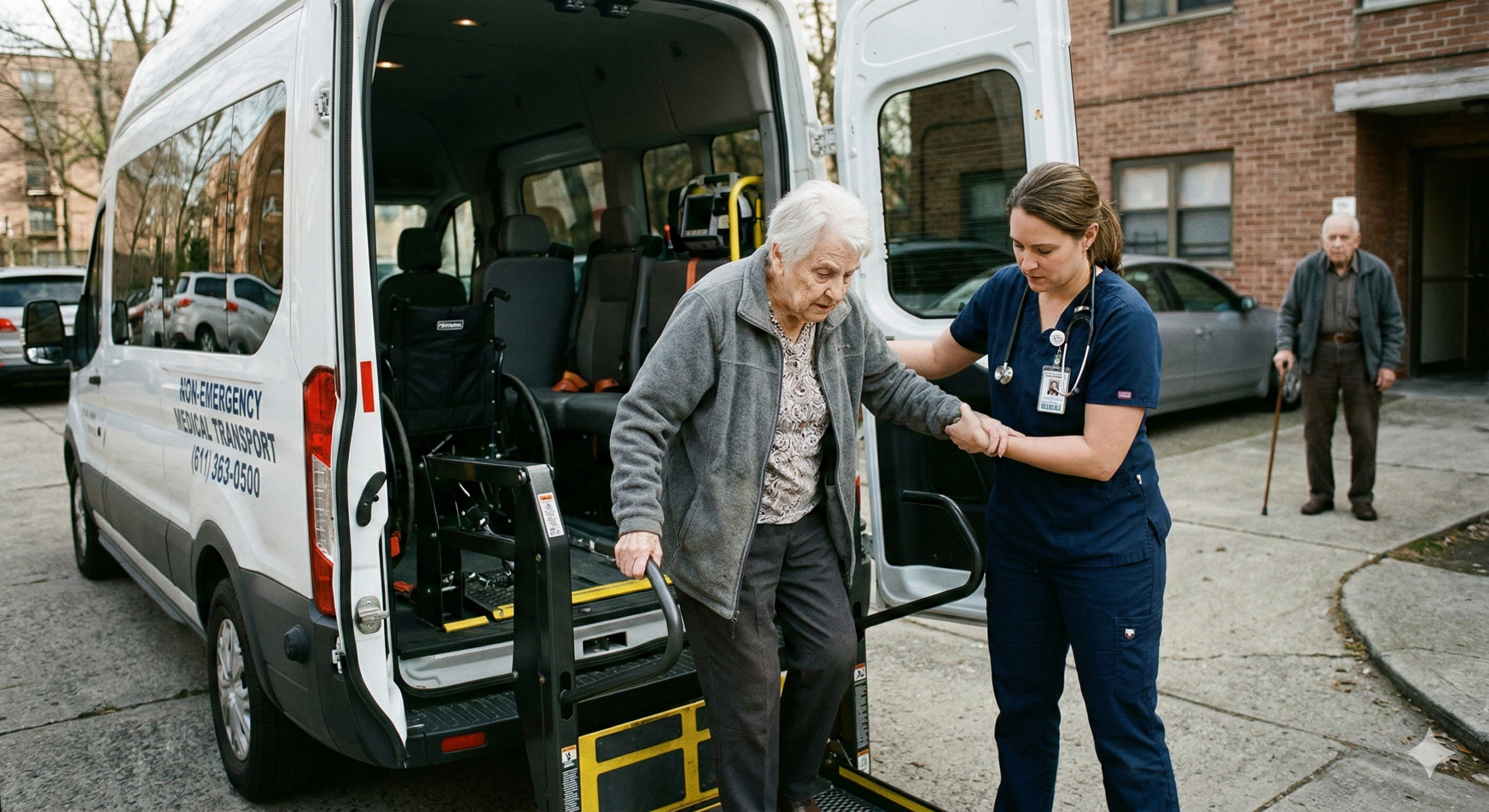
NEMT passengers are often elderly, disabled, or medically fragile. They may use wheelchairs, require stretcher transport, or need assistance boarding and exiting the vehicle. The risks in this population are real and serious.
Common causes of injury include:
Improper wheelchair securement is one of the most frequent problems. Federal and state guidelines require that wheelchairs be secured using a four-point tie-down system. When drivers skip that step or do it incorrectly, passengers can be thrown forward or sideways during a stop or collision.
Failure to assist passengers safely during boarding and exiting causes falls that lead to fractures, head trauma, and worse. Elderly passengers with limited mobility are especially vulnerable at this stage of the transport.
Vehicle accidents cause injuries ranging from soft tissue damage to catastrophic harm. When the driver is distracted, speeding, or unfamiliar with the passenger’s condition, the likelihood of injury increases.
Using unqualified drivers is another documented problem. NEMT subcontractors are supposed to screen and train drivers for medical transport. When a broker like Modivcare fails to verify that a subcontractor meets those standards, and a passenger is hurt as a result, that failure can become part of a negligence claim.
Who Can Be Held Responsible
Liability in a Modivcare or LogistiCare injury case rarely falls on just one party. Depending on what happened, potential defendants may include the subcontracted transportation company, the individual driver, and Modivcare itself.
Modivcare’s broker status does not automatically insulate it from liability. If the company retained control over how rides were conducted, set operational standards that were not enforced, or failed to audit its subcontractors for compliance, arguments exist that it shares responsibility for what happened to a passenger.
California law recognizes theories of negligent hiring, negligent supervision, and negligent retention. These theories can apply when a company knew or should have known that a subcontractor or driver posed a risk, and failed to act on that knowledge.
Under Welfare and Institutions Code Section 15600 and related provisions, California also recognizes elder abuse claims when a dependent adult suffers harm due to neglect or recklessness. In the right circumstances, a NEMT injury involving an elderly or disabled passenger may qualify as elder abuse under California law, which carries additional remedies beyond a standard personal injury claim. You can learn more about how these claims work on our California Elder Abuse Lawyer page.
The Role of Medi-Cal and Managed Care Plans
Many Modivcare rides are arranged through Medi-Cal managed care plans. Those plans have contractual obligations regarding the quality of transportation they provide to members. When the broker they hired fails to deliver safe transport and a member is harmed, the managed care plan’s role in that failure may also be worth examining.
This does not mean pursuing a claim against a government program. It means that the full picture of who had a duty to this patient, and who failed to meet it, extends beyond just the driver who showed up that day.
What to Do After a NEMT Injury
Document everything as soon as possible. Photographs of any visible injuries, the vehicle, the wheelchair tie-downs, and the scene all help establish what happened. If the injury required emergency treatment, keep all records from that visit.
Get the driver’s name, the transportation company’s name, and any identifying information on the vehicle. Request the trip manifest or ride confirmation from whoever arranged the transport.
Report the incident to Modivcare directly and in writing. California also has complaint processes through the Department of Health Care Services and, for managed care plan issues, the Department of Managed Health Care. Filing those complaints creates a paper trail and may trigger an internal investigation.
Evidence in these cases can disappear quickly. Vehicle inspection records, driver qualification files, and GPS data from the day of the trip may be critical. An attorney can send preservation letters early to prevent that evidence from being lost or destroyed.
Deadlines That Apply to These Claims
California’s general statute of limitations for personal injury is two years from the date of injury. However, if the claim involves a government entity or a public program, shorter deadlines may apply. Claims against government entities in California often require a government tort claim filing within six months of the incident.
If Medi-Cal or a managed care plan with government ties is part of the picture, those timelines matter. Missing a government claim deadline can bar recovery entirely, regardless of how strong the underlying case is.
If you have questions about your specific case, you can call (888) 712-0017 to discuss what happened and determine the next steps. You do not have to figure this out alone.
Official Resources:
Medi-Cal Non-Emergency Medical Transportation Use when referencing Medi-Cal covered transport and patient rights under that program.
California Department of Managed Health Care Use when referencing managed care plan complaints or oversight of Medi-Cal managed care plans.
California Elder Abuse Law — Welfare and Institutions Code Section 15600 Use when referencing the elder abuse legal theory already cited in the blog.