
Brookdale Assisted Living neglect often begins quietly, long before families realize something is wrong. In my experience handling elder abuse and assisted living neglect cases in California, the warning signs usually appear as subtle changes that are easy to dismiss until real harm has already occurred. Families rarely call because they have proof. They call because something feels off. That instinct matters.
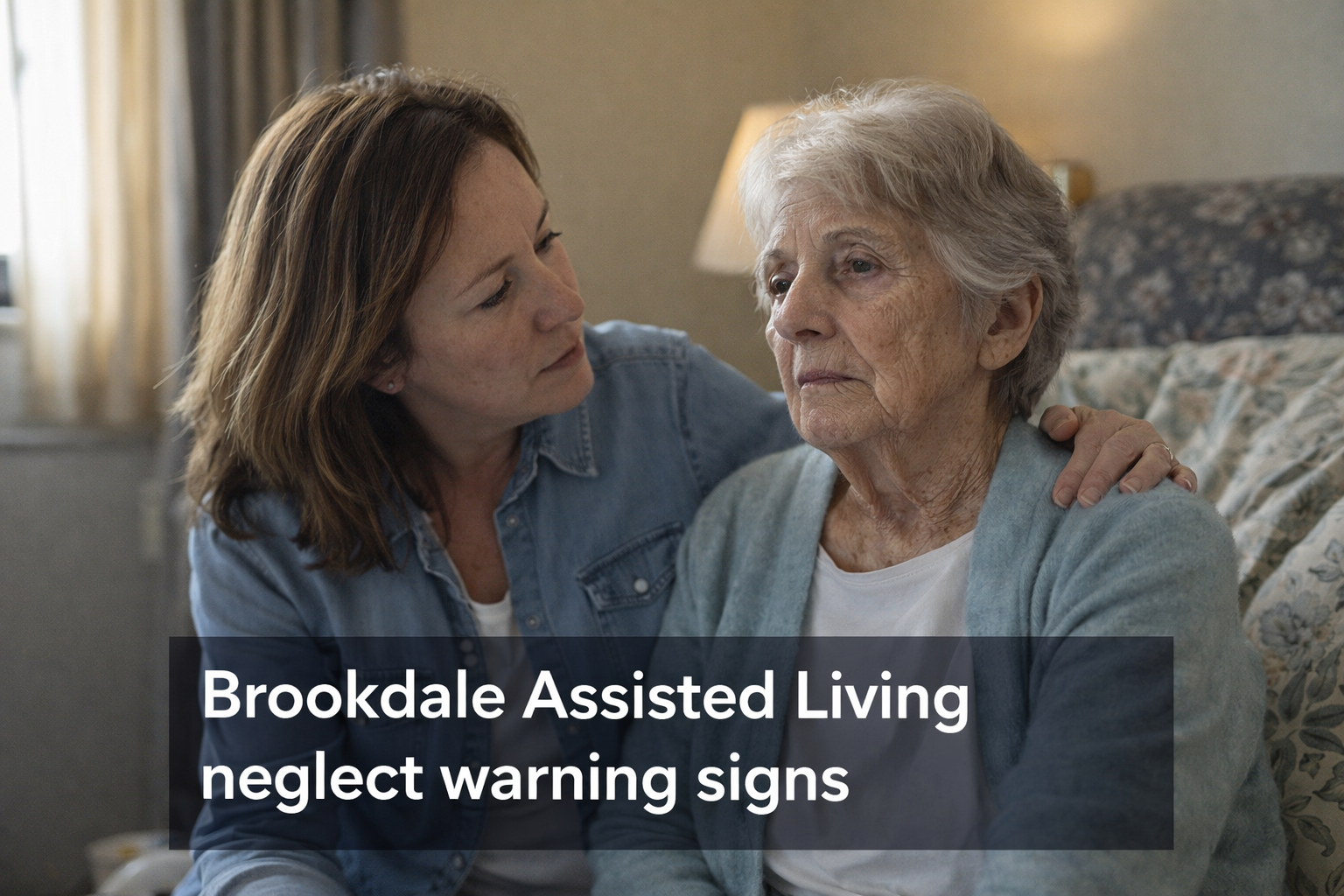
If you are worried about a parent living at Brookdale Assisted Living, you are not overreacting. You are doing exactly what responsible family members should do when they sense neglect may be happening behind closed doors.
If you want to talk through what you are seeing and whether it crosses a legal line, you can call me at (888) 712-0017. A short conversation can help you understand what matters and what does not.
Brookdale Assisted Living Neglect Warning Signs Families Miss
Neglect does not always look like abuse. Most assisted living neglect cases do not involve physical violence. They involve unmet needs that compound over time.
California law treats neglect as a failure to provide care, supervision, hygiene, nutrition, or medical attention consistent with a resident’s assessed needs. At assisted living facilities, those failures often appear as small lapses that slowly become dangerous patterns.
Families frequently report unexplained weight loss, dehydration, recurring infections, or a parent who suddenly appears withdrawn or fearful. These changes are often blamed on aging, dementia, or depression. Sometimes that explanation is accurate. Sometimes it is not.
Physical Warning Signs That Should Not Be Ignored
In many cases, the body tells the story before anyone else does. I regularly see neglect claims supported by physical changes that were overlooked for too long.
Common red flags include unexplained bruising, pressure sores, skin breakdown, frequent falls, or repeated hospital visits for preventable conditions. Poor hygiene is another major indicator. If your parent appears unwashed, is wearing soiled clothing, or has untreated rashes, that is not a comfort issue. It may be neglect.
Medication problems are especially serious. Missed doses, double dosing, or unexplained prescription changes can cause rapid physical and cognitive decline. Families are often shocked by how loosely medications were managed once records are reviewed.
Behavioral Changes Can Be the Earliest Clue
Neglect is not only physical. Emotional and psychological changes often appear first.
If your parent becomes anxious around staff, refuses to speak freely when caregivers are present, or appears fearful of retaliation, those behaviors matter. A resident who suddenly stops participating in activities or becomes isolated may be responding to neglect or intimidation.
I have handled cases where residents stopped using their call button because no one responded. That kind of learned helplessness does not happen overnight.
Staffing Shortages Are a Common Root Problem
In many Brookdale Assisted Living neglect cases, understaffing and delayed response times are the root cause of preventable injuries. One of the most frequent issues I see involves chronic staffing shortages where facilities accept more residents than they can safely care for.
Families often notice unanswered call lights, slow response times, or staff members who appear overwhelmed or unfamiliar with residents’ needs. These are not just customer service issues. They can be evidence of systemic neglect.
When staffing levels fall below what residents require, essential care gets missed. Supervision decreases. Falls increase. Medical issues escalate.
What California Law Actually Requires
Assisted living facilities in California are regulated by the California Department of Social Services through its Community Care Licensing Division. These regulations require facilities to provide care consistent with each resident’s assessed needs, including assistance with mobility, hygiene, nutrition, and medical coordination.
When an assisted living facility fails to meet those obligations and a resident is harmed, families may have grounds for an elder abuse or neglect claim. These cases are not about perfection. They are about safety, dignity, and basic care.
For a broader explanation of how California evaluates these cases, see Elder Abuse and Care Facility Negligence in California which outline how systemic failures are analyzed across long-term care settings.
What You Can Do Right Now If You Suspect Neglect
Start documenting what you see. Take photographs, keep notes, request medical records, and track changes over time. If possible, speak privately with your parent and listen closely.
You are allowed to ask questions. You are allowed to demand explanations. And you are allowed to seek legal guidance before the situation escalates.
If your concern involves an injury, hospitalization, or rapid decline, you may also want to review What to Do If a Loved One Suffers an Injury in a Nursing Home, which outlines immediate steps families often overlook.
If you are unsure whether what you are seeing qualifies as Brookdale Assisted Living neglect, you can call me at (888) 712-0017. You do not need proof to have that conversation. You just need concern.